Is the LEGO La Catrina Worth Buying?
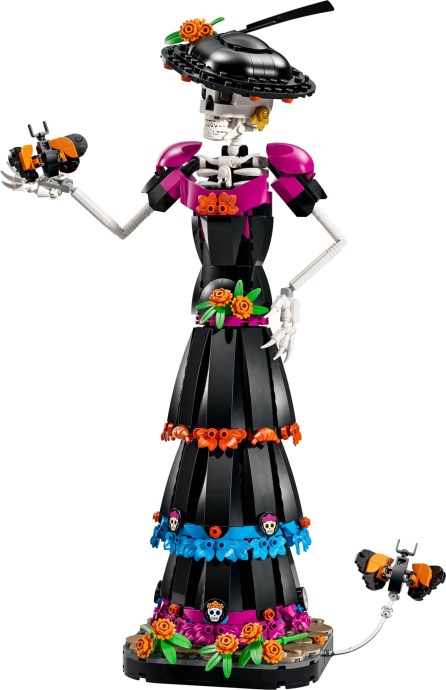
7.72/10. Worth buying. A 1,212-piece brick-built tribute to Mexico's most recognisable calavera, standing over 43 cm tall in marigold orange and magenta, with posable arms, a monarch butterfly, and a flower-strewn display base.
Comparing your options? See where it lands in our best LEGO Ideas sets ever, ranked.

Some subjects LEGO chooses because they look good on a shelf, and some it chooses because they carry a whole culture on their shoulders. La Catrina is squarely the second kind. This is not a spaceship or a supercar. This is the elegant skeleton in the big feathered hat who greets you every Dia de los Muertos, the figure a Mexican printmaker etched over a century ago and a muralist later dressed head to toe. So when an Ideas box turns up with that grinning calavera on the lid, I do not raise the sceptical eyebrow I usually save for licensed cash-ins. I lean in. This one has a real story behind the bricks, and LEGO clearly knew it.
What pleases me most is that this is not a timid little vignette. At 1,212 pieces the finished figure stands over 43 cm tall, a proper brick-built sculpture in marigold orange, magenta and black, posable at the head and arms, with a monarch butterfly and a base strewn with flowers. It treats La Catrina as the centrepiece she deserves to be rather than a novelty, and that respect is the whole reason it works.
At 1,212 pieces this is a proper adult Ideas build, marked 18 plus, and it takes the sensible sculpture-first route. You work from an internal armature outward, giving the tall figure a stable spine before the decorative skin goes on, which matters when the finished model stands well over 40 cm and needs to hold its own weight without sagging at the waist or the hat.
The skull is the moment everyone builds this set for, and it earns the attention. Assembling the curved cranium and the hollow eye sockets from small elements gives you a real feel for how the friendly, open-mouthed calavera expression comes together, and it is the part where you first realise the model is going to read as La Catrina from clear across the room.
The ornate hat is the other showpiece stage. La Catrina without her wide, extravagant hat is not La Catrina, and LEGO builds it up as a broad brim dressed with brick-built marigolds so it frames the skull the way the original artwork intended. Getting the blooms seated around the crown is a satisfying, fiddly bit of decoration that transforms the silhouette the instant it sits in place.
Where the build asks for patience is the flowing dress. Wrapping the tall body in the black-with-orange-and-magenta garment means a fair amount of panel and slope work to keep the folds looking like fabric rather than a stack of bricks, and the printed sugar-skull and papel picado motifs need careful orientation so the patterns line up down the figure. It never becomes a chore, but this is a set where the drama is front-loaded into the skull and the hat, and the pacing settles into steadier decorating toward the end. Budget an unhurried afternoon.
Finished, La Catrina has genuine presence. Standing over 43 cm tall and around 29 cm wide, she is a centrepiece rather than a shelf ornament, and the silhouette is instantly readable: the grinning skull, the vast flower-dressed hat, and the long dress falling to the flower-strewn base. This is one of the most recognisable figures in Mexican culture, and the model captures it cleanly at a scale that commands a room.
The colour palette is where it sings. The black dress accented with orange and magenta, the marigold blooms scattered across the hat and base, and the printed sugar-skull detailing all pull straight from the visual language of Dia de los Muertos. Under a display light the warm orange of the cempasuchil marigolds catches beautifully against the black, and the whole piece photographs like the festival altar it is quietly referencing.
The posable elements are what make it a joy to arrange rather than just park. The head and arms move, so you can angle her gaze and set her hands to suit your shelf, and a brick-built monarch butterfly can either perch on the base or sit in her hand, giving you a small but meaningful choice in how she is displayed. The butterfly is no accident either, monarchs return to Mexico each autumn around the Day of the Dead and are woven into the holiday's symbolism.
There are no minifigures here, and rightly so. This is a single brick-built sculpture in the mould of LEGO's other large Ideas and art figures, and adding a little plastic person next to a 43 cm calavera would only have undercut her. She is the whole show, and she carries it.
Twelve hundred and twelve pieces for a figure at this scale is a fair haul, and the mix is unusual in a genuinely useful way. The warm oranges, magentas and blacks are exactly the colours a botanical or floral builder is always short of, and the marigold assemblies are a small masterclass in brick-built flowers that will migrate straight into other creations.
The build leans on curves, slopes and printed decoration rather than a cabinet of exotic specialist parts, which keeps most of the elements reusable rather than locked to one figure. The printed sugar-skull and papel picado tiles are the set-specific pieces that limit their wider MOC use, but they are also the ones doing the heavy lifting on the finished character, so it is a fair trade.
On lasting appeal, this is a LEGO Ideas set built on a fan submission, tied to a genuine cultural icon rather than a passing licence, and Ideas figures with real subject-matter behind them tend to hold interest well after their wave has moved on. A Day of the Dead centrepiece is the kind of release that stays meaningful year after year, especially as it comes back into season every autumn. Our LEGO Investing 101 guide walks through why landmark-subject and Ideas sets tend to age the way they do.
La Catrina began as a satire. Around 1910 to 1913 the Mexican printmaker Jose Guadalupe Posada etched a skeletal figure in a fancy European hat and called her La Calavera Garbancera, mocking Mexicans of the era who denied their indigenous roots and put on airs of European gentility. The point was pointed and democratic: strip away the finery and the wealth, and beneath every hat is the same bare skull. Death, in Posada's hands, was the great equaliser.
She became an icon through Diego Rivera. In his 1947 mural Sueno de una tarde dominical en la Alameda Central, Dream of a Sunday Afternoon in the Alameda Central, Rivera gave Posada's floating skull a full body, an elegant dress and a place at the centre of the scene, and it was Rivera who popularised the name Catrina, roughly the well-dressed lady. What had been a sharp cartoon became a national symbol, and over the following decades she settled into the folklore of Dia de los Muertos.
Today La Catrina is inseparable from the Day of the Dead, the holiday when families welcome back the spirits of the departed with marigold-lined altars, sugar skulls and monarch butterflies. She is not a figure of fear but of celebration, a reminder that death is a part of life to be met with colour and dignity rather than dread. LEGO building her at this scale, marigolds and all, is a fitting nod to an image that carries a great deal of meaning for a great many people.
Anyone with a connection to Mexican culture or Dia de los Muertos is the obvious core audience, and for those households this is an easy, heartfelt yes. As a seasonal centrepiece that comes out every autumn alongside the marigolds and the ofrenda, it is the sort of set that earns a permanent place rather than a one-and-done build.
Adult display builders who want variety beyond buildings and vehicles will value it as a genuine sculpture. It sits alongside LEGO's art and figure sets while telling a completely different story, and its posable head and arms and the movable butterfly give it more to play with than a static ornament.
It is also a strong pick for anyone who appreciates art and folklore, the sort of piece that starts a conversation about Posada, Rivera and where the image actually came from. As a way into the brick-built figure format, the flower and colour palette is a bonus that outlasts the first display.
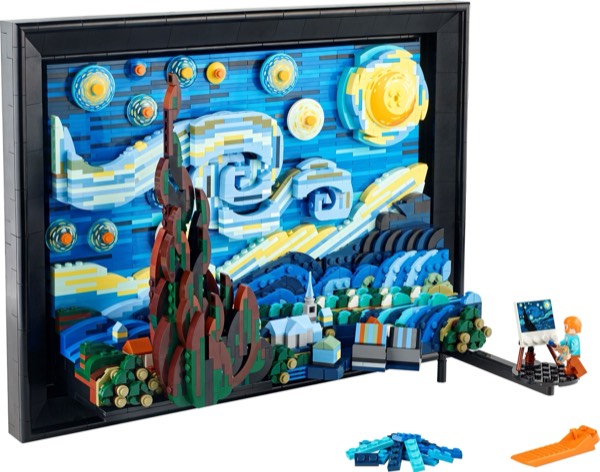
La Catrina pairs naturally with LEGO's other large art-led display pieces. Set beside Vincent van Gogh The Starry Night (21333), you get a shelf that treats famous imagery as brick-built sculpture rather than mere models, one swirling night sky and one grinning calavera.
For a display that leans into her marigolds, the Van Gogh Sunflowers (31215) makes a warm floral companion, the orange blooms of the flowers echoing the cempasuchil scattered across her hat and base. It is a pairing that turns a corner of the shelf into a small burst of autumn colour.
And for a bolder, graphic counterpoint, the Keith Haring Dancing Figures (31216) brings a jolt of pop-art energy next to La Catrina's folkloric elegance, two very different ways of turning a cultural icon into a wall or shelf statement.
Pros
- Instantly recognisable La Catrina silhouette at a genuine centrepiece scale over 43 cm tall
- Marigold, magenta and black palette pulls straight from Dia de los Muertos
- Posable head and arms plus a movable monarch butterfly add real display flexibility
- Brick-built marigolds and printed sugar-skull motifs give a premium, authentic finish
- Warm florals and colours are a useful haul for botanical builders
- Honours a genuine cultural icon with real history behind it
Cons
- The dress stage settles into steadier decorating after the skull and hat
- Printed sugar-skull and papel picado tiles have limited wider MOC use
- A tall single figure needs a fair footprint and height to display well
- No minifigures for collectors who value them, though the sculpture is better without
La Catrina is one of the more meaningful display sets in the current Ideas range, precisely because LEGO respected the weight of the subject. At 1,212 pieces it delivers a substantial brick-built sculpture, over 43 cm of grinning calavera in marigold orange and magenta, with a posable head and arms, a monarch butterfly, and a flower-strewn base that ties the whole piece back to the festival it honours.
It takes EARL APPROVED status comfortably on the strength of its display presence, its authentic palette and the sheer cultural resonance behind it, held just shy of the very top tier only by the steadier dress-decorating stretch and the footprint a figure this tall demands.
Available now, and an easy recommendation for anyone with a connection to Dia de los Muertos, any art-minded builder, or any collector who wants a shelf piece that means something. A century on from Posada's etching, La Catrina still commands the room, and so does the model of her.
- Vincent van Gogh The Starry Night Review - Another large art-led display piece, a natural shelf-mate for La Catrina
- Van Gogh Sunflowers Review - Warm floral colour to echo her marigolds
- Keith Haring Dancing Figures Review - Pop-art energy as a counterpoint to her folkloric elegance
- Best LEGO Ideas Sets, Ranked - See where La Catrina lands against the whole Ideas line
- LEGO Investing 101 - Why Ideas and landmark-subject sets tend to age well
Track it in your vault on GameSetBrick - our free collection app. Log your condition, price paid, and watch the real-time market value.
Track in Your Vault →Save it to your wishlist on GameSetBrick. Share your list with friends and family - every set has a buy button so gift givers know exactly where to go.
Add to Wishlist → GameSetBrick is a free app by The Earl of Bricks. See all features. Scan it. Track it. Trade it.